LATENT SPACE: Authenticity over Algorithms
Why this producer walked away from 30K monthly listeners to start over, and how authenticity became his secret weapon
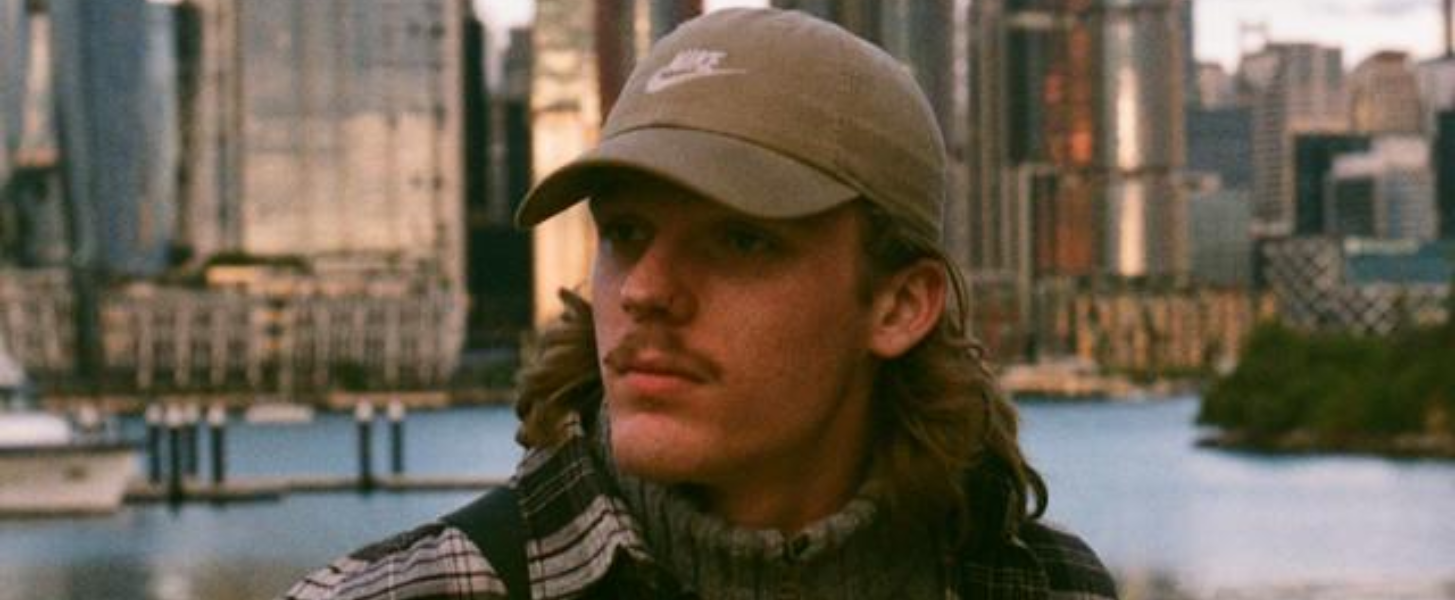
In an industry obsessed with streaming numbers, LATENT SPACE made a bold decision: abandon a successful alias with 30,000 monthly listeners and 7 million total streams to start completely fresh. The gamble paid off. By focusing on genuine artistic expression over trend-chasing, this immersive electronic music project has built a dedicated global following drawn to its cinematic soundscapes and striking visual identity.
Behind the project lies a unique fusion of scientific rigour and artistic vision, a robotics engineer who’s used Ableton Live to analyse human nerve responses and built custom 3D-printed speakers for Dolby Atmos experimentation. This technical precision, combined with a bold approach to AI-generated visuals, has propelled the project to industry recognition, including winning the prestigious Kx5 remix competition against established producers worldwide.
We sat down with the artist behind LATENT SPACE to discuss using Ableton to analyse nerve responses, building custom Dolby Atmos setups, and why he chose authenticity over chasing streaming algorithms.
Your project statement mentions that “AI generated images look real… yet not. Music can make you feel something… but?” Can you elaborate on this concept and how it influences your creative decisions?
It’s a question about what makes something feel real versus fake. It’s a somewhat abstract question on why certain things make us feel a certain way and why music (or any art-form) can evoke certain emotions. It’s something I found myself thinking about with the rise in AI tech and the “is AI art, art?” debate. Creatively, I really enjoy exploring this concept of emotion through music, some songs make us feel euphoric, sad, aggressive, etc, but they’re not always an easily identified feeling. I usually try to structure my work so that it presents a general emotional theme, falling in love, breakups, growth, reflection, introspection, and all of the other classics that people write about. I try to stay abstract with these themes, I prefer the “show don’t tell” approach. You’ll often find repeating phrases or samples that push the general theme. I want to leave the connection up to the listener to relate in their own way with their own experience.
How do you balance the technological aspects of your project with the emotional, human elements you’re trying to convey?
This is a really interesting question to me, it somewhat relates to the question of “what does it mean to be human?” and where technology and AI fits into that. In terms of finding a balance, it’s not something I consciously try to. I find that it just happens naturally in how I work, creatively or technically. I think of these recent advancements in generative AI as just another method of presenting an idea. In the same way that photography allowed us to instantly capture a moment vs painting a still scene. I think generative AI will change how we approach digital art and creation by allowing people to explore ideas and concepts without technical restrictions, gate keeping, or years of learning curves. Technology is a fundamental part of what it means to live in the modern world and it enables us to connect in ways we couldn’t 50 years ago. The technological aspects of this project are just another way for me to guide an audience in the direction I imagined during the creative process, whether it’s AI generated visuals, AV lighting setups, or immersive audio. If anything, I think the technology only empowers the human elements that I’m exploring.
The Kx5 remix win was a huge milestone. What was your strategy going into that competition, and how did it feel to get recognition from deadmau5 and Kaskade?
Winning that competition was a seriously surreal moment for me. My strategy for that competition was to just stick to the “does it sound/look good?” rule that I’ve grown into. I don’t remember setting out to make anything specific for that remix, it just evolved out of some sound design experiments with the remix stems and drum grooves. Having an official release associated with deadmau5 and Kaskade is a dream come true for me. ‘I Remember’ from deadmau5 and Kaskade is one of those early day electronic tracks I started listening to when I started exploring the genre. I very proudly have my first-place prize signed Kx5 album art hanging up in my studio.
We noticed you collaborate with Tayla and East Esplanade on tracks like “Heavy On Mind” and “Midnight Patience.” How did these creative partnerships develop, and what does your collaborative process look like?
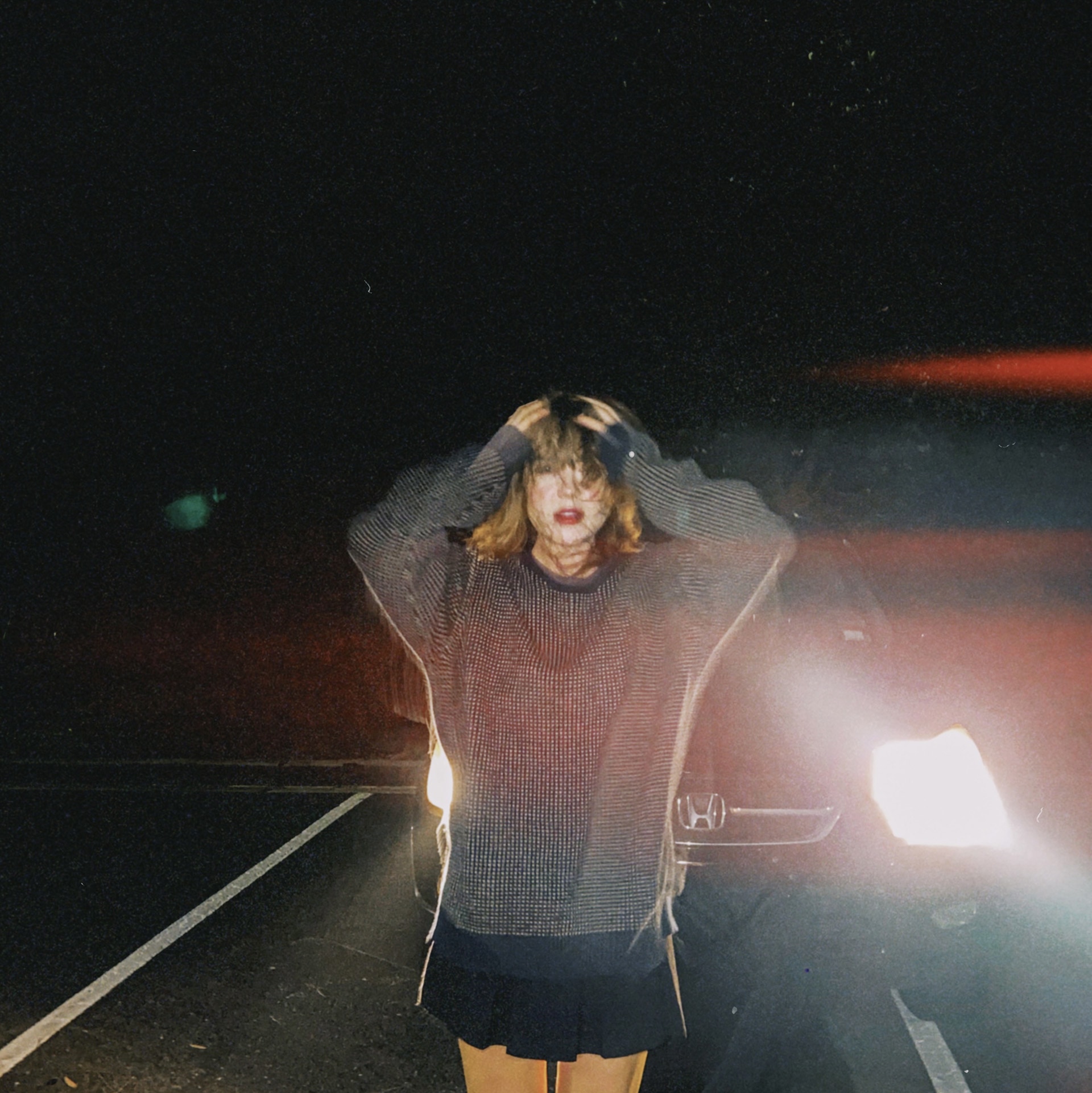
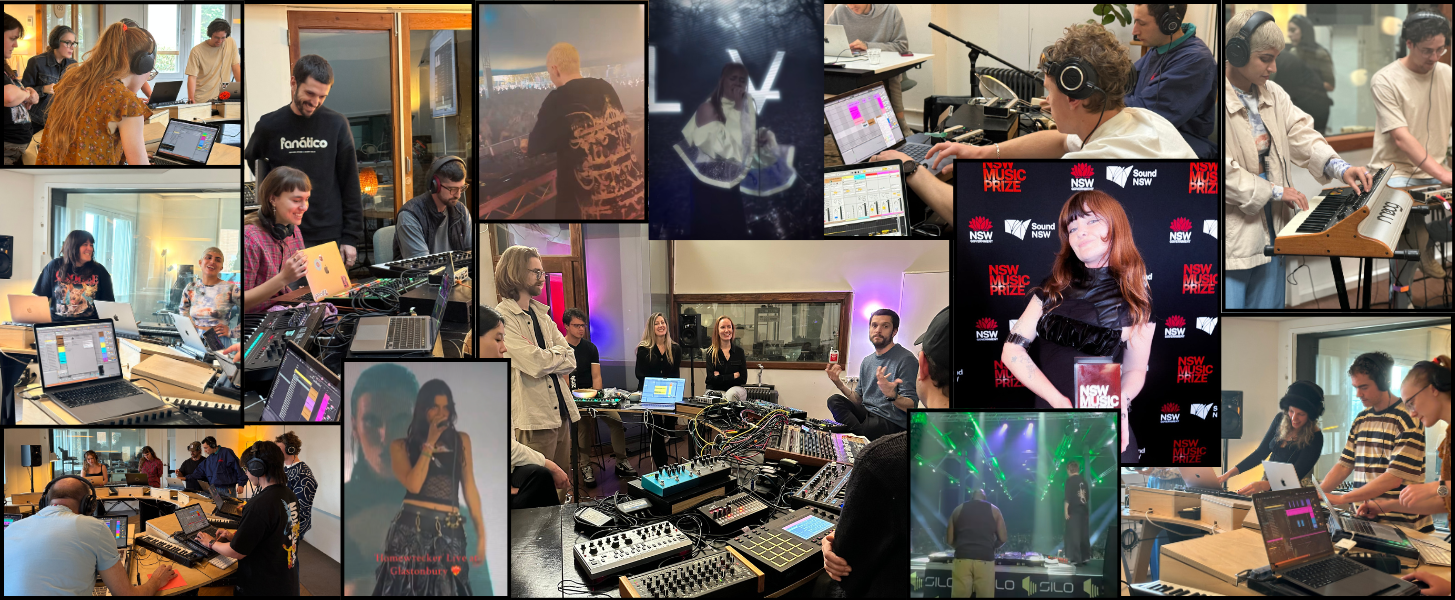
Liveschool was the origin for both of these collaborations! I met Tayla and Timmy (East Esplanade) both through Liveschool events and I’m incredibly grateful for these opportunities to meet other artists through these sessions. For Heavy On Mind, I had a track concept that needed vocals, and after listening to Tayla’s discography I instantly knew we had to collaborate. The process for Heavy On Mind was similar to my visual process, it started with some concept images and themes I felt were fitting for the track, which I sent to Tayla for inspiration. There were some basic samples and lyrics on the demo which we worked from, but Tayla really took the whole theme of the track and ran with it, adding her own voicing, style, and story to it. Midnight Patience with Timmy was quite different! The track was born from a session in Timmy’s studio where we just started messing around with his Moog and Prophet synths. The opening FX that you hear on the track was 100% by accident. We bumped one of the knobs on the Prophet and it just happened to make that fluttering LFO effect. Timmy has a natural talent for writing chords, progressions, and melodic grooves which is really where the foundation of the track was built.
[LATENT SPACE + Tayla]
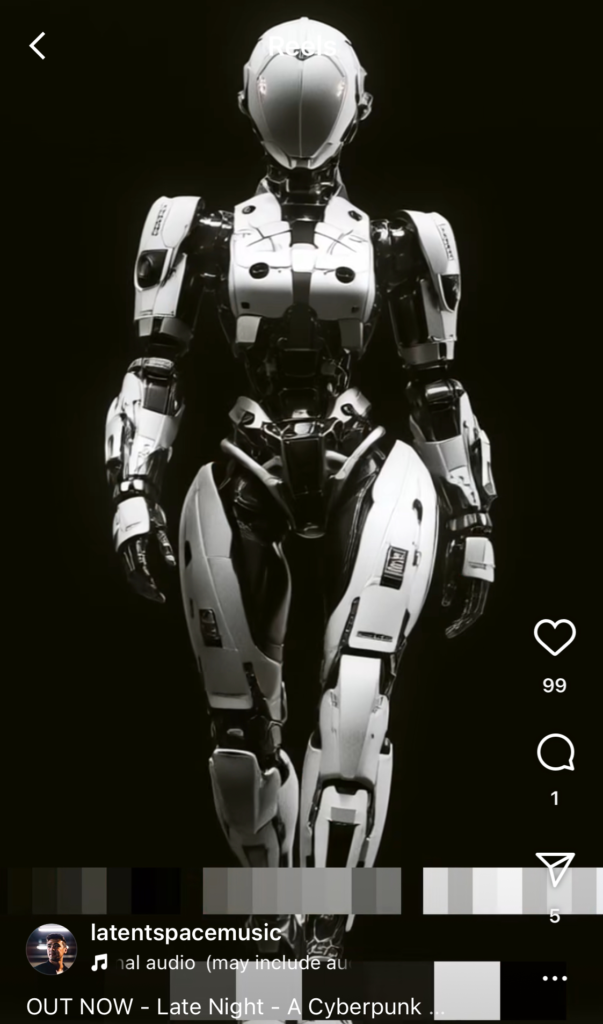
Your Instagram feed is incredibly cohesive and visually striking, all those black and white portraits, glitch effects, and cinematic compositions. What’s your approach to creating this visual identity?
Honestly, the whole visual identity around this project is largely decided on “do I think it looks good?”, and then I go with it. The music always comes first and serves as the starting point for all of my visual content. Once I have a track in progress I usually start browsing through Pinterest or Instagram and save photos, reels, ideas that I think look “correct” (whatever that means). Some of the cohesion probably comes from the music acting as a starting point. I try to structure all of my releases to fit within the LATENT SPACE universe.
Do you create all the visual content yourself, or do you collaborate with other artists? Walk us through your typical process for creating the imagery that accompanies your releases.
This will probably be somewhat controversial… but a majority of my visual content is generated by AI. There are a couple of renders I made in Blender, but it’s quite an involved process, and for anyone that has used Blender… it’s not exactly an intuitive or quick tool to lay down ideas when you’re feeling creative. So far I haven’t collaborated with other visual artists but I’d really love to! My usual process starts by taking the collection of images I saved earlier and generating a lot, and I mean a lot, of images. I have one video project that took over 1700 generations that I filtered through before I was happy. From these images it’s another stage of video generation, further filtering, and then editing and composition in DaVinci Resolve. It’s really a process that comes back to that idea of “does it look good?”. It’s an area that these AI tools excel at that no other technology can really compare to. I find it extremely powerful to explore different aesthetics, designs, and concepts in seconds without needing to spend hours upon hours modelling, texturing, and rendering scenes to come to a conclusion that I don’t even like it. For me, it’s really just the same concept as using Splice samples in music production. It’s easy to throw together something quickly and check if it’s the direction I want to go. With all that said… I do think this new world of AI is quite terrifying and there are real risks and dangers that come with a technology like this, even if it’s a powerful tool.
How important is the visual component to LATENT SPACE? Could the project exist without this strong visual identity?
At its core, LATENT SPACE is a music project. I like to think of the visuals as a supporting element to the music that adds an extra dimension or direction to the experience. The visual identity for this project lives in a similar space as artists such as Eric Prydz, Tale of Us, Anyma, Rezz, Max Cooper, and many other large-scale AV productions. The whole experience of going to a show and being fully immersed in the visuals, music, lights, lasers, and stage is really magical to me. My dream is to one day build a dedicated team and work together to create an immersive large scale AV show.
For a new project, your monthly listener numbers are impressive and constantly rising! What advice would you give to other electronic artists about building an audience?
The recent surge in streams that these releases have gained is really quite special to me, and I’m incredibly appreciative of everyone who has been listening! Before starting this project I made the decision to step away from a previous alias which was pulling in 30K monthly listeners and has totalled over 7 million streams as of today. I’m much prouder of the audience that’s slowly growing around this project and feel a lot more connected with my new releases than my previous alias. In terms of building an audience? I’d say to just do what you think best represents you and your music and to put it out into the world for people to connect with! I don’t see much value in chasing trends or copying what’s popular for the sake of popularity. It’s an easier route to racking up streaming counts but I’m not sure it’s effective for building an audience. There’s so much digital noise on social media and streaming services, I think people appreciate finding work that’s genuine and not just clout chasing.
[LATENT SPACE + East Esplanade]
You’ve built a strong following across platforms with very distinctive content. How do you balance creating content for social media with focusing on music production?
Honestly, I really struggle with this balance between social media and production. I don’t have much of an interest in fame or being an influencer in front of the camera. I find social media content creation to be a bit of a grind and it often feels like I’m creating content to feed an algorithm out of the necessity of modern day marketing and promotion. I’d really like to move my social content more towards showcases of performances and how I picture these visuals in their proper AV setting rather than posting the visuals as content.
Your tracks have this cinematic, immersive quality. How do you approach arrangement and sound design to create that atmosphere?
I’m really fascinated by immersive and surround audio and how easy it is to trick our brains into hearing “space” through psychoacoustics and imaging tricks. The cinematic style started out from boredom of spamming snare drums and risers with a generic pitch bend into a drop. I’m a big fan of movie and game soundtracks and the intensity they can build without a DJ telling you to put your hands up. I try to use melodic elements, chord structures, filters, reverbs, and audio effects to create tension and release rather than a straight snare roll. Naturally this led to experimenting with more imaging plugins, psychoacoustics, spatial fx, and other crazy M4L devices. If you ever open one of my Ableton projects you’ll also find an absurd amount of EQ8’s in mid/side mode with nearly every band in use. I don’t really subscribe to the “less is more” when it comes to my projects, I like to fit as much harmonic content as I can through arps, delays, reverbs, and atmosphere fx. I hardly ever bounce to audio. If a track already has 20 effects and I want to make a tweak, I’ll just add another and keep going. It’s more important for me to stay in the creative flow (until my CPU gives up). I should also mention my use of Splice samples. They form the early foundations of every track I work on. The samples help provide a direction I want to go in and from there I try to manipulate them into something more unique by time-stretching, chopping, pitch shifting, fx, etc. Messing around with so many spatial fx introduces a lot of risks when it comes to mono compatibility and the “body/soul” of a track. I use a range of visualiser tools to help keep everything in control (Voxengo Span, Vision 4x, and true:level mostly). However, visual tools aren’t enough to dial in everything which leads me to my monitoring setup. Over the years I’ve collected a pretty massive amount of audio equipment and speakers, enough to start experimenting with Dolby Atmos setups in my studio. I currently use a Neumann KH750 subwoofer, Neumann KH120 monitors, and 3D printed speakers I built for the Atmos height / surround array. The Atmos setup is really a game changer for playing around with immersive and spatial fx. Hearing sounds pan around my head and feeling fully immersed in the audio makes sound design sessions incredibly fun. I currently only have the equipment to upscale stereo audio to Atmos via a home theatre AVR, but one day I would love to explore full-scale object based Atmos mixing and sound design. Even with this spatial setup, my final checks are always in mono, with special care to check that the spatial elements aren’t too overdone. If everything is wide, nothing is wide – a very important lesson from Liveschool’s very own Alex Braithwaite.
Tell us about your journey into electronic music production. How did you develop your technical skills and approach to creating music?
My musical journey began at age 5, when I was gifted my first guitar. Since then, music and creating have been a life passion of mine. Before I was 16 I never listened to electronic music, I was a full-blown emo-punk, metal, rock kid in love with bands like Blink-182, Paramore, Slipknot, Avenged Sevenfold, etc. That was until I found Pendulum and instantly fell in love with the energy and crossover between rock and electronic elements. From there, guys like Skrillex, Martin Garrix, and Porter Robinson really opened the door to electronic music for me. Around this time I wanted to form a band and follow the artists I listened to but quickly realised that getting 4+ dedicated people together for band practice was unbelievably difficult. This is what lead me to discover electronic music production. I could create whole songs by myself, in my bedroom, without needing to organise practice sessions!? I quickly found myself watching YouTube tutorials during lunch breaks at school on how to produce music with Ableton. I specifically remember watching a bunch of videos of Flume at Liveschool! All of the technical skills I’ve developed so far have just come through experimentation, YouTube, and absorbing as much information as possible about production, mixing, and mastering. I’ve also found that my formal education in robotics engineering, mathematics, and computer science – plus my technical career in engineering has been extremely powerful in influencing my approach to production. I’m naturally fascinated by maths, acoustics, and digital signal processing. Having a formal education and professional experience in this area has been insightful in understanding what Ableton is doing under the hood and how it can be used to manipulate signals and waveforms. At one job I even found myself using Ableton to analyse human nerve responses recorded from nerve implants to gain an understanding of the frequency and phase behaviour. I think this natural love for the nerdy side of things has been really advantageous in learning the technical side of production, mixing, mastering, and speaker translation. While at university I was also fortunate enough to find work DJing clubs and events which eventually led to an amazing opportunity programming and running a club AV system using Resolume and GrandMA.
What’s next for LATENT SPACE? Any upcoming releases or new directions you’re exploring?
So much… I’m currently scheduling my next set of releases for this half of the year. My next release will be ‘Pattern’ set for 15/08/2025. Chill, UKG, Immersive, LATENT SPACE. I try to stick to a release schedule of every 4 to 8 weeks so there will be plenty of new releases to feed the algorithms and fans. I want to start experimenting with more coherent visual content rather than just short form clips for social media. I’ve been thinking of programming my own VJing app with a game engine like Unity or Unreal Engine and linking it with Ableton to start playing with more real-time generative and reactive visuals. Collaborations. I want to work with more vocalists, producers, engineers, visual artists, anyone who’s interested in creating something together and getting onboard with this project. Please reach out if you’re keen!
LATENT SPACE’s latest release “Midnight Patience” featuring East Esplanade is available now on all streaming platforms. Follow the project on Instagram @latentspacemusic for the latest visual content and release updates.