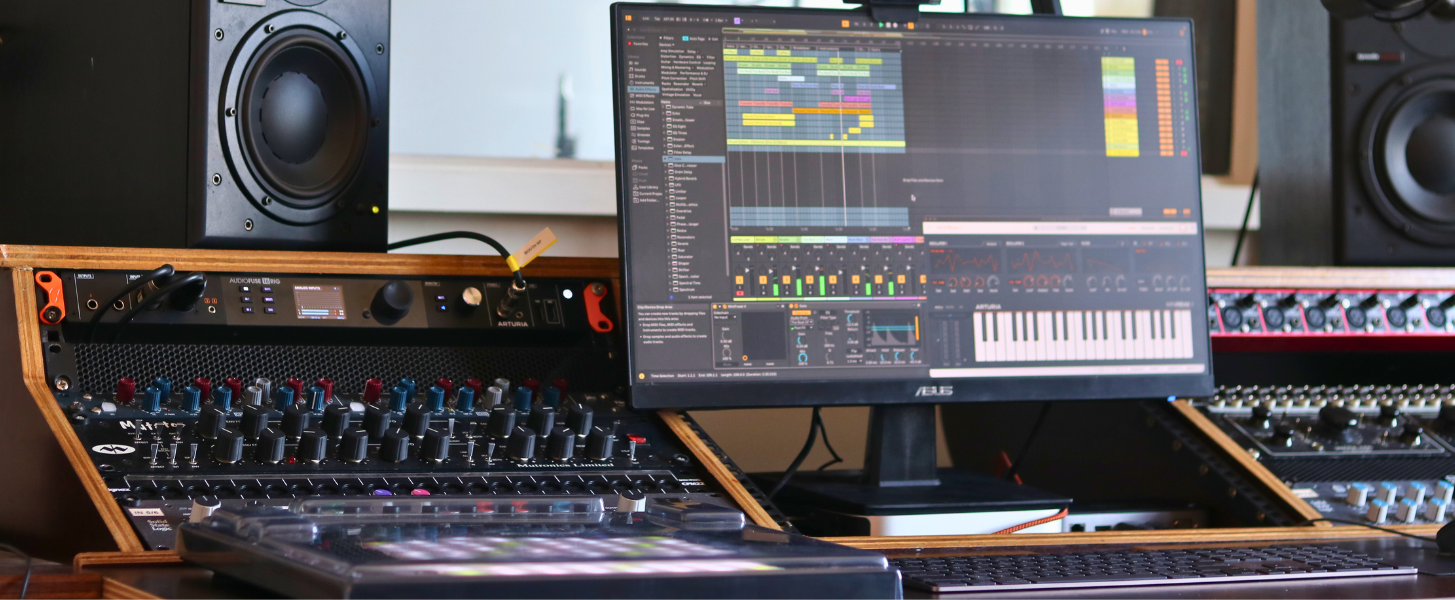
Why Every Producer Needs Studio Time (And How to Make It Count)
There’s a moment in every producer’s journey when they realise their bedroom setup has hit its ceiling. Maybe it’s when you’re trying to get that kick to punch through properly, or when you’re second-guessing your vocal levels for the hundredth time. That’s when you discover what industry veterans have known for decades:a good sounding studio helps you hear what needs fixing, and working in a focused space gets things done.
Ahead of our Studio Production short course our expert trainers and producers share their insights on the benefits of studio time, and how to make the most of it.
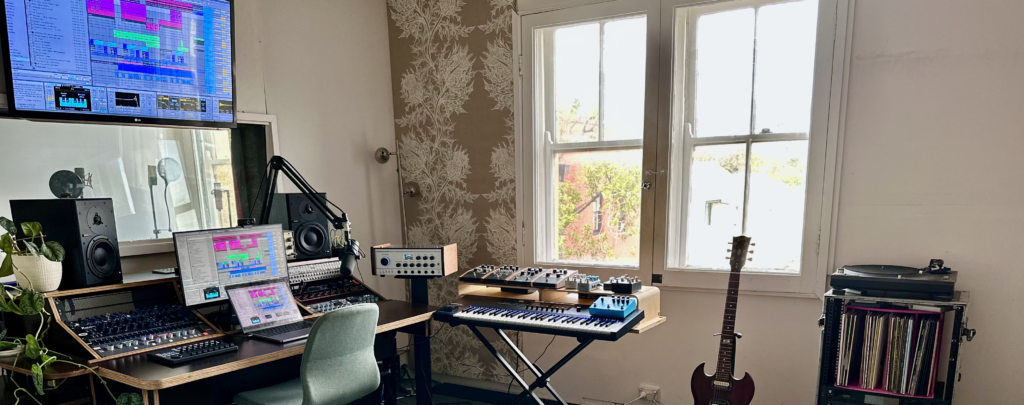
Studio Time Can Transform Your Creative Process
Studio hire isn’t just about access to expensive gear—though that’s certainly part of it. It’s about stepping into an environment specifically designed to unlock your creative potential and technical precision.
The Right Headspace
When you step into a professional studio, your mindset shifts from “bedroom act” to “working producer.” This mental shift alone can be enough to unlock breakthroughs that weren’t coming at home.
Zero Distractions
Home studios come with home distractions—flatmates, deliveries, the washing machine, your bed calling you for “just a quick nap.” Professional studios eliminate all of this. You’re in a dedicated space with one purpose: making music. And having a set start and finish time helps avoids endless noodling that goes nowhere.
Pristine Sound Environment
There are two aspects to a great sounding room:
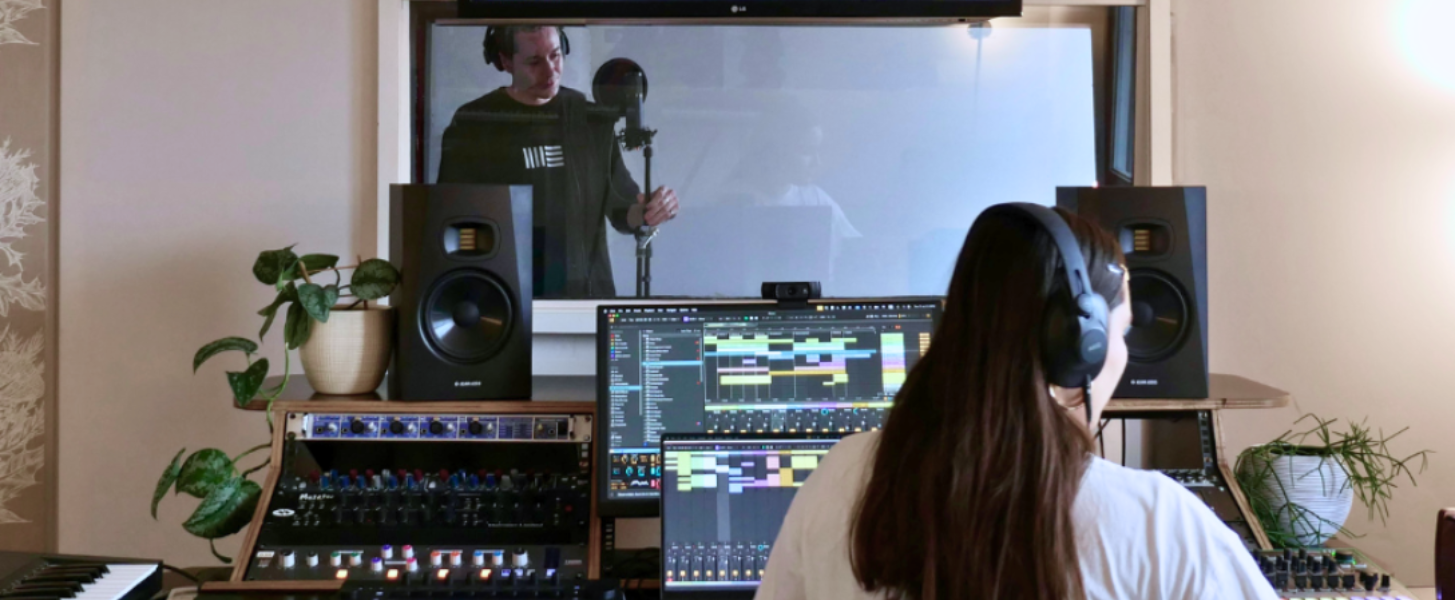
- Soundproofing. This stops outside noise from coming in to the room, noise which could mask elements in your mix. And soundproofing between vocal booth and the production studio helps get a great vocal recording while the producer can hear the mix without resorting to headphones.
- Acoustic treatment. These are the wall panels, bass traps, ceiling clouds and other elements that transform a standard room into a focused sound stage that the speakers can accurately project into. This is the essential element for clearly hearing every aspect of what you’re working on so you can make the right decisions, and make them quickly.
Another upside to soundproofing is you can crank the volume to really get into the writing, or a suitably quiet background for low-volume mixing:
“Try making initial level balance decisions at low volume on mid-range focused speakers. Avoid the trap of working loud when mixing”
— Tim Watt, Mixing Engineer at Liveschool
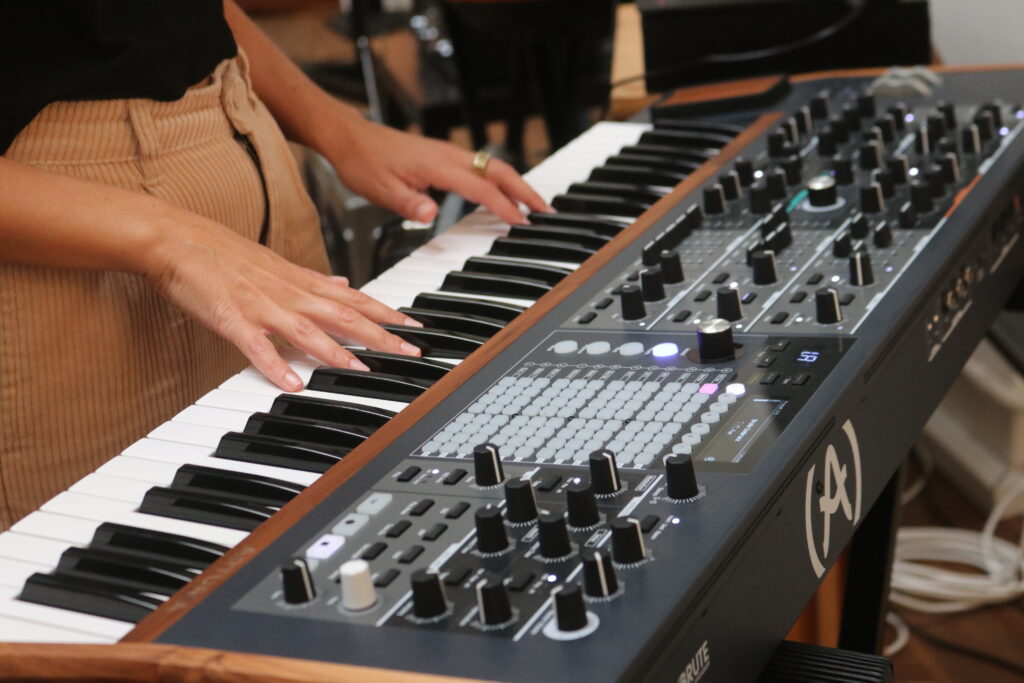
Access to Dream Gear
While studio time can be affordable, a huge benefit can be the access to gear that would otherwise be too expensive. A single Neve 8803 EQ costs more than many producers’ entire setups. Choosing a well-equipped studio can add tools to your project that would otherwise remain fantasy purchases.
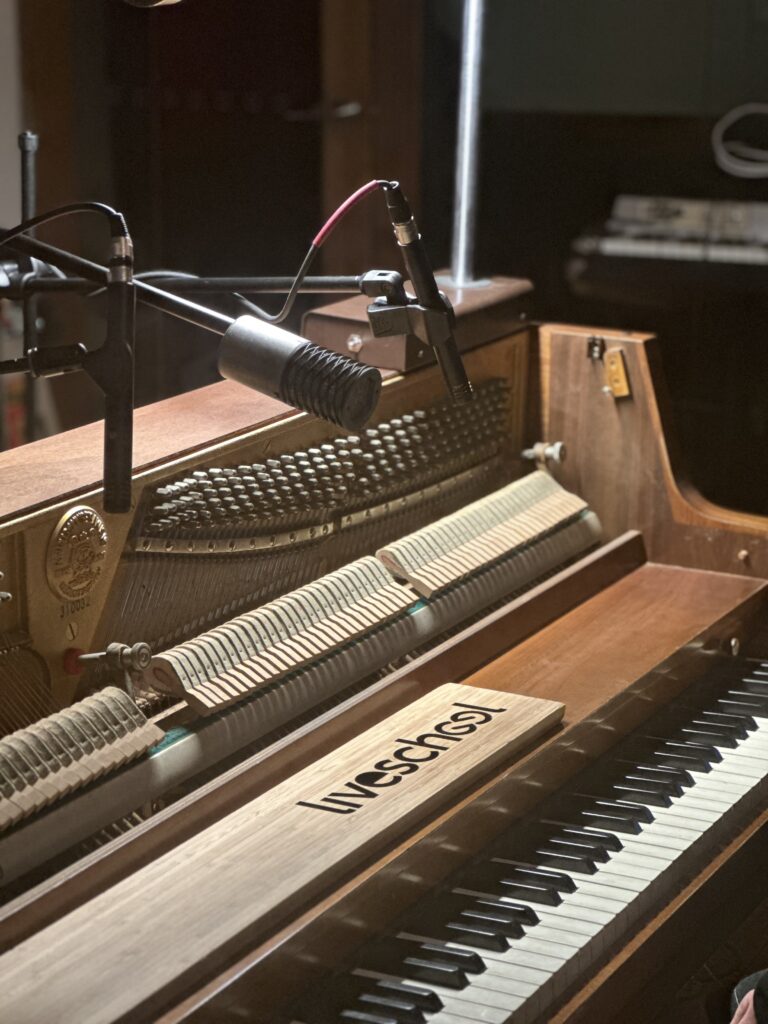
A Liveschool, our Production Studio includes high-end hardware audio effects:
Outboard Effects
- EchoFix Chorus Tape Echo
- SSL Fusion Stereo Mastering
- SSL The Bus+ Compressor
- Mutronics Mutator mod filter
- Neve 8803 dual-channel EQ
- LA-610 mk II tube mic pre and compressor
- Chase Bliss and Strymon effects pedals
- Moogerfooger pedals (103 12-Stage Phaser, 104 Analog Delay, 105 Murf, 108 Clusterflux)
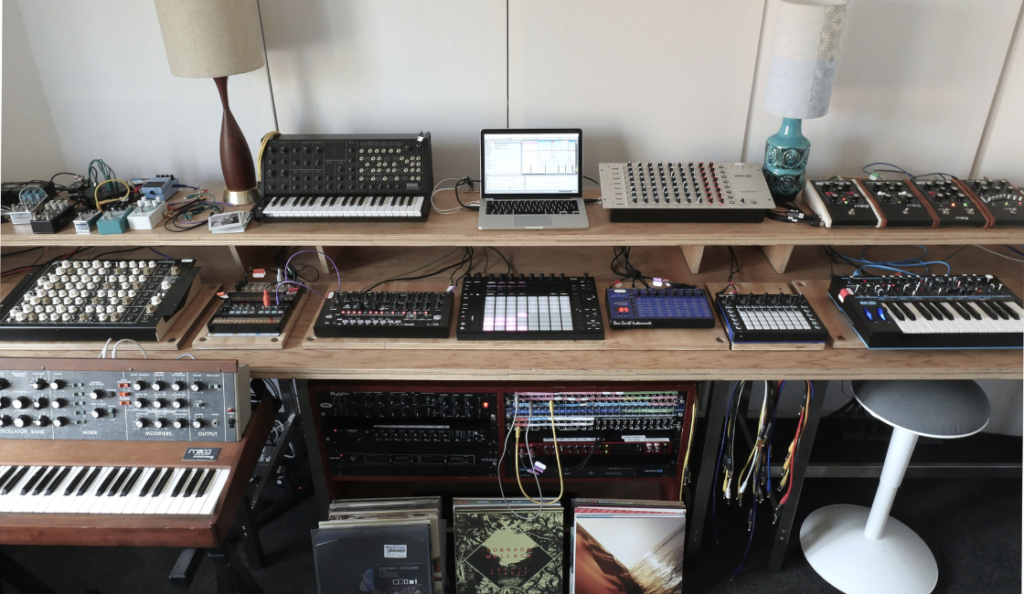
In addition to this, you can choose to add synths and drum machines for your session, and there’s some truly special pieces:
- Moog Minimoog Model D
- Arturia PolyBrute
- Roland SH-5
- Roland Juno 106
- Abstrakt Avalon Bassline
- Korg Prologue
- Korg MonoPoly
- Waldorf Microwave XT
Creative Community
Studios are hubs of creativity. Not only is it a more professional space to bring your vocalist or collaborators to, it’s a good place to meet other producers, engineers, or artists to can spark something new. This community aspect of studio culture has shaped music history—countless legendary collaborations started with chance meetings in studio hallways.
Expert Ears and Perspectives
Professional studios often come with access to experienced engineers and producers who can assist your session or offer fresh perspectives on your work. Sometimes the most valuable part of a studio session isn’t the gear—it’s having someone with professional experience listen to your track and offer insights you couldn’t see yourself.
How to Get The Most From Your Studio Time
The three things that will make the biggest difference are:
- Your intention for the session/s
- What time/s you book
- Which “type” of studio booking you choose
1. Set your goals
First and foremost, know what your goal is for each session before you arrive. This helps you get concrete outcomes from every session, which move the ball forward on your project or release.
“Always have a session plan, and set realistic goals for the amount of time you’ve booked. Aim to get to a certain point by the end of each session, and you will get results that make a meaningful impact to your project, that you’ll resonate with when you listen back later.”
— Stew Geddes, Studios 301.
2. Choose the right schedule
There’s two aspects to this:
- What time of day—are you a morning person or a night owl? Choose the right time for your creative headspace.
- How many hours, or how many sessions do you need?
- If you’re recording vocals, a single 4 hour session should be enough.
- If you’re collaborating, producing or mixing, book a full day to allow enough time to get in the zone.
- If you’re working towards a release, a weekly time slot (same day / time each week) will help build a routine of getting things accomplished.
3. Select which “type” of studio session
When booking studio time, you also get the option of adding an assistant engineer, an engineer, or a solo DIY session:
- DIY Approach – Rent the room and gear to work independently, solo or with your own collaborators. If you’ll be using any of the hardware, the studio operators will give you a 15 minute guidance on the equipment before the start of the session, and supply you with resources to work the gear yourself.
- Assistant Engineer Support – You can choose to have an assistant engineer with you (either throughout the session or available on-call) to handle the technical aspects of using the equipment. You have all the creative control, plus the benefit of expert setup and troubleshooting.
- Full Producer/Engineer Collaboration – You can choose to book an engineer / producer (not an assistant engineer) for your sessions. If you are the creative visionary but want help with not just the equipment but also need someone to get great sounds and shape your vision into reality, booking an Engineer instead of an Assistant Engineer, is the way to go. Working with an experienced producer / engineer transforms studio time into collaborative creation. They bring professional experience, fresh creative perspectives, and deep knowledge of how to get the best from both the gear and the project you’re creating.
Where to Access Professional Studio Time
Your studio choice depends on your budget, goals, and the type of experience you’re seeking. Here are the main options available to Sydney producers:
Home Studio Upgrades
Before looking external, consider whether strategic home studio improvements might solve your immediate needs. Sometimes better monitoring, acoustic treatment, or a single piece of quality outboard gear can bridge the gap. However, home setups always have limitations—especially in acoustic treatment and monitoring accuracy.
Liveschool Studios
Located in Sydney’s creative heart of Surry Hills, The Production Studio offers a fully-equipped recording and production space just 10 minutes from Central Station. The 17m² studio includes a connected vocal booth that fits up to three singers, with both rooms soundproofed and acoustically treated for high-quality recording and mixing.
Production Studio hire – one-off sessions or a weekly repeating time slot.
Optional gear available: browse the complete add-on equipment catalog.
Studios 301
In the Australian studio landscape there’s no bigger name than Studios 301. Located just across the hall from Liveschool’s Production Studio, the new Studios 301 rooms are where you’ll find the best engineers in the business, including Stefan Du Randt (2025’s MPEG Mix Engineer of The Year) and vocal producer Simon Cohen.
Between just those two, their credits include Katy Perry, Cold Play, Zedd, Die Antwoord, Justin Bieber, Will.I.Am, and Troye Sivan.
View this post on Instagram
Expert Insights: Studio Hire vs Full Production
We spoke with Stew Geddes, Senior Engineer at Studios 301, to get the inside perspective on how to approach professional studio time and what separates successful sessions from missed opportunities.
Common First-Time Mistakes
Preparation varies dramatically based on your session type. A songwriting session might just require showing up with an instrument, laptop and headphones, ready to create. However, producers recording multiple musicians need time to get-to-know the studio in order to get the most out of it.
— Stew Geddes
What makes a great Recording Session
If you’re not only working “in the box”, but devoting much of your studio time to recording, it’s great material and well-rehearsed players that will have the biggest impact:
— Stew Geddes
This reinforces a crucial point: studios amplify what you bring to them. Great preparation plus professional environment equals transformative results.
Making Studio Time Pay Off
Whether you’re investing in studio time for creative breakthroughs or professional development, here’s how to ensure every session delivers maximum value:
Before You Book
- Define your goals: Are you recording, mixing, experimenting, or collaborating?
- Choose your approach: DIY, assistant engineer, or full collaboration?
- Prepare your material: Have sessions organised, stems bounced, and reference tracks ready – and if you’re recording musicians, make sure they’re well prepared or rehearsed.
- Research the room: Understand what equipment is available and how it fits your project
- Set realistic expectations: Don’t try to finish an entire album in one session
During Your Session
- Start with room familiarisation: Spend 15 minutes understanding the monitoring and workflow
- Focus on studio-only advantages: Use studio time for things you can’t do at home
- Document everything: Take photos of settings, record voice memos about what works. Not just for socials, but so your next session can build on previous results.
- Stay flexible: The best studio discoveries often happen when you deviate from your plan
After Your Session
- Take detailed notes: What worked? What didn’t? What would you do differently?
- Back up everything: Cloud storage or external hard drives will spare you the heartache of a lost project or hit song,
- Apply learnings: Use insights to improve your home setup and plan future sessions. Did your home-productions sound too bassy in the studio? That’d probably be because your home setup is swallowing the bass frequencies, causing you to overcompensate. These kinds of insights will improve your at-home results.
Every studio session teaches you something new about your own music and production process. These insights compound over time, improving not just your current project but every future production.
The Investment That Transforms Careers
Compared to bedroom production, studio time is an investment that might seem expensive— but consider the alternative cost of time wasted being unproductive, making suboptimal decisions in compromised listening environments. Professional producers understand that studio time can be a level-up in skill development, creative breakthrough, and professional credibility.