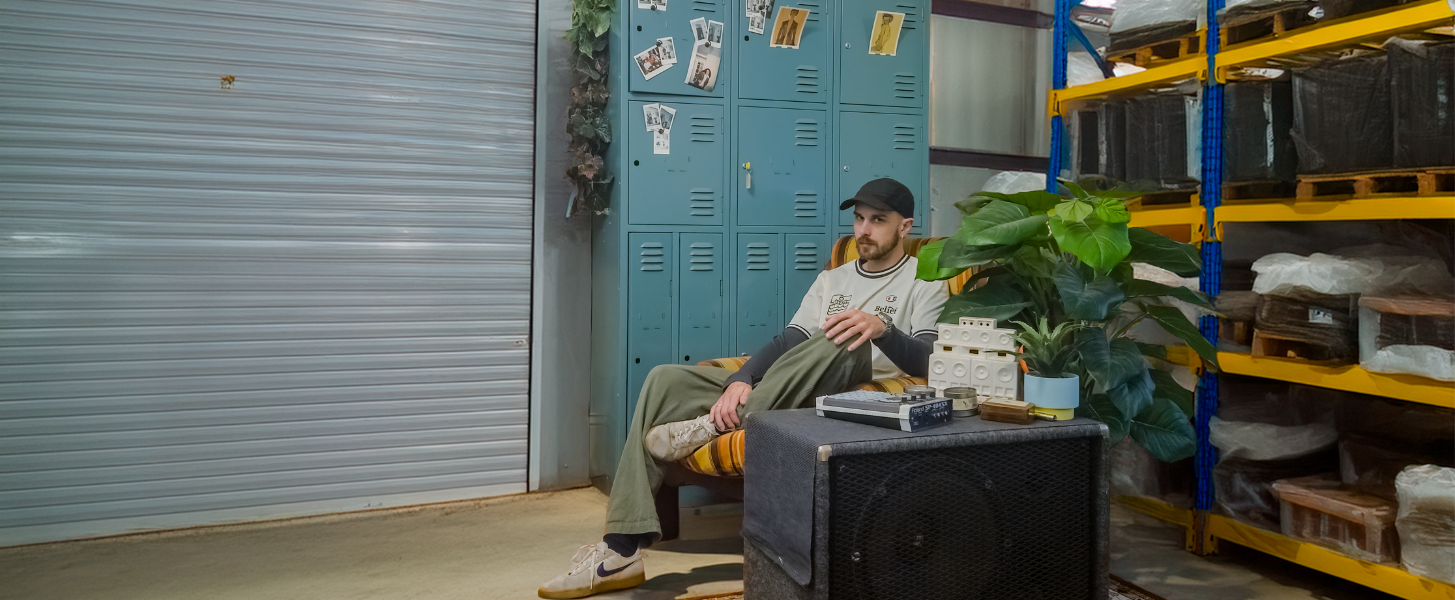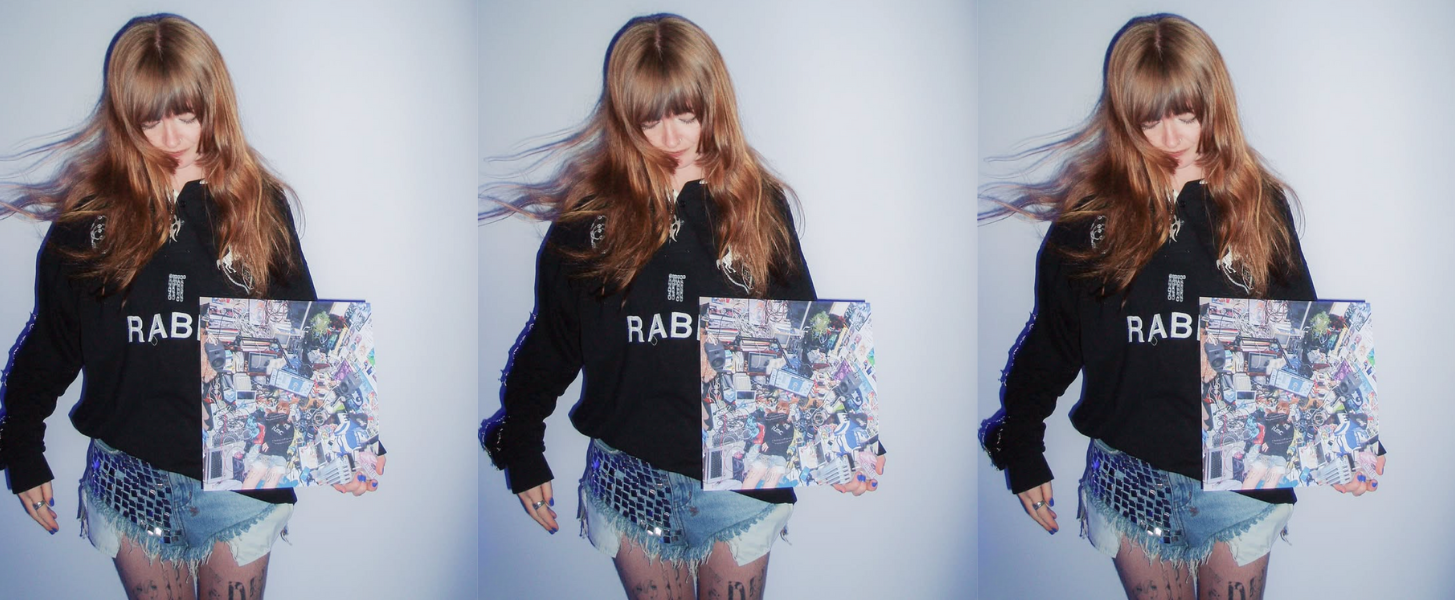
Some producers start with sounds. JOY. starts with the song.
If you’ve ever spent hours building an amazing loop only to realise you don’t actually have a finished track, you’re not alone. It’s one of the biggest hurdles producers face – and it’s exactly where JOY.’s approach is different. For her, production exists to support emotion, not replace it.
That mindset has taken Olivia McCarthy from writing piano-led songs in Brisbane to co-writing with Future and The Kid LAROI, producing records heard by millions, and building a catalogue that’s amassed more than 50 million streams. But despite the credits, the process hasn’t changed: write something worth feeling first, then produce around it.
Now a trainer at Liveschool, JOY. helps students develop that same instinct – learning how to move beyond loops, finish stronger songs, and create music that connects long before the mix is finished.
Emerging through Triple J Unearthed, JOY.’s solo releases – including Captured, Ode, Portal and Six – established a sound built on understated vocals, piano-led writing and emotionally detailed production. Alongside her artist career she’s co-written and produced for Future, The Kid LAROI, Polo G, Russ, ZHU, What So Not, Jessica Mauboy and many more, while touring internationally with artists including SZA, Kehlani and Charlie Puth.
Songwriting
When a song idea arrives, what usually appears first – a chord at the piano, a vocal melody, a lyric, or a sound?
Depends on the day! Working across so many different genres, with different creative processes and briefs, each day looks different – and each song idea usually does too. I don’t have one fixed way of starting; it depends on which tools are in front of me that day. Sometimes an idea arrives while I’m driving or out and about, in which case I’ll whack it into voice memos and pick it up later in the studio. Lyrics-first is my least frequent approach – at best I’ll have a one-line concept if I’m starting from words.
So much of your solo work is piano-led. What does starting at the piano give you that starting in the DAW doesn’t?
With my background in classical music, I just feel incredibly competent behind a piano – and guitar – so it’s a comfort thing. I write a lot of my vocal melodies by playing them on piano first; my voice was actually trained singing to accompany my own playing. The main difference is there’s no grid. A lot of piano-led or guitar-led ideas feel boundaryless when they first arrive, and the next step is working that back into the box.
People often think songwriting is about inspiration, but you’ve written professionally for years. Has it become something you can intentionally sit down and do, or does it still rely on waiting for the right feeling?
I started composing on piano at a very young age, so it’s a habitual practice for me now. I’ve never been stuck to start or create – I can always get an idea going. But when I’m being more intentional about the song or the message I’m trying to portray, I find a better outcome when I’m in a specific mood or state of mind. It can’t always be on a schedule, especially if the song is more emotional in content.
A lot of people can make a nice loop but stall there. What’s your advice for getting from an 8-bar idea to a finished, structured song?
Arrangement View, first of all – if you’re not already using it in Ableton Live, it’s a great starting point, because it helps you visualise “song” instead of “loop”. It’s a bit like writing a short story: you can map out the intro, the problem, the climax, moments like that. It helps you produce with the intention of building a storyline, rather than a single moment or mood.
How do you know when a song is actually written, versus when you’re just decorating it with production?
Truth be told, I think in such a saturated market most songs are hidden behind production. It’s a tricky game – I’ve spent a lot of time decorating and reproducing something in hundreds of different versions before realising there’s no actual “song” or message there at all. The common test is whether you could perform it acoustically, with one instrument or just a few, and have it still hold up to an audience. If you can’t picture a way that would be possible, it’s usually pretty telling that the song is lacking real substance.
The test is whether you could perform it acoustically, with one instrument, and have it still hold up. If you can’t, it’s usually telling you the song is lacking real substance.
JOY.
Producing Emotion
Your records feel intimate and emotional rather than loud and technical. How do you produce for feeling – anything you consciously do, or avoid, to protect that?
There are probably lots of little things I do to hold onto that feeling, but bigger picture, it’s just how I’ve always made music. Even before I was producing, I was composing emotional music. Producing for feeling is really just prioritising the story or message of the song above everything else, and being intentional about sound choices. Some people are brilliant at making club bangers, which I love – I just find emotional storytelling comes naturally to me. Although I do love a fun brief.
How do you stop yourself from over-producing something that already feels emotionally complete?
No comment! Honestly, over-producing is part of my learning and creative process – it’s what’s taught me to be more selective. But you have to do too much first to learn that.
Is there a specific chain or move you rely on to get that intimate, close vocal sound – something a student could try?
Nothing intentional, really. I have a very quiet singing voice, and from years of performing next to loud drummers I learned to keep the microphone as close to my mouth as possible – and that’s carried into the studio. But to get that intimate, close vocal sound, I also make sure I leave enough space in the instrumental for it to make sense. My vocal sits at such low gain that it constantly gets lost, so the production has to give it room.
Writing for Other Artists
What’s the biggest difference between writing for artists like Future or LAROI and making a JOY. record? What changes when you’re serving someone else’s vision?
Whenever I work with another artist, it’s artist first. As their producer, I’m there to support their vision. If I can bring expertise, it’s only ever used in collaboration with them, to make sure we get the best outcome and that they feel happy with what we’ve made. In sessions with other artists I tend to withhold a lot of my personal feedback when I can tell it’s coming from my own artistic opinion. My opinion matters, but I’m not always the one leading in those rooms – more facilitating, and that’s when it works best. When it comes to the details and fine-tuning, the roles reverse.
What’s the biggest misconception people have about professional songwriting sessions?
That they’re a party. They’re not. There’s a lot of tedious work involved if you’re actually trying to get a song written, recorded, produced and finished inside a 9-to-5.
There’s a misconception that professional sessions are a party. They’re not.
JOY.
The Mistake Almost Everyone Makes
What’s one songwriting mistake you see almost everyone make when they’re starting out?
Rushing. For me it’s always quality over quantity. I see a lot of young artists trying to work too quickly – I was one of them – and working that way can stop you making timeless songs and having longevity as an artist.
Creative Habits
What’s one habit in your workflow that genuinely changed your output?
In Ableton Live specifically, I love the User Library. I love recycling parts or old ideas that never saw the light of day, and the User Library makes it really easy to fly something in from an old session.
What part of the process do you still find hardest, and how do you work around it?
Finishing a song. Overthinking the finish can be a real problem for me – there are so many details and layers, and when I’m writing, producing and recording myself, chasing perfection across all three at once creates delays. There’s no real rush, but I’ve found a deadline can actually help by keeping the momentum up.
Taste & Reference
A track you return to when your ears feel lost – what does it do so well?
“Anchin Kfy Ayinkash” by Hailu Mergia and the Dahlak Band – this is my palette-cleanser song! I just love it. It clears my brain and helps me lock back in, and sets this perfect happy mood. It’s such a nice change of pace sonically. That song, plus stepping outside the studio, is magic.
A song nobody would expect you to love?
Honestly nothing will be that surprising, because I work across everything from rap to rock to country to classical – I just really love music, and love what’s different about each genre. But a band I’m loving right now is Hermanos Gutiérrez – palette-cleansing again. Working in and consuming so much music every day, in my own time I mostly listen to instrumental music. Their songs are these fleshed-out guitar riffs that go on incredible journeys – it takes me right back to my guitar loop-pedal days.
The Teacher’s Ear
When someone plays you their first song, what are you listening for? Not production, not mix – what makes you think “there’s something here”?
Overall vibe – all the parts working in coherence. You can deconstruct any song, unreleased or a number-one hit, right down to the bones and find issues with it or the mix if you look hard enough. So what matters most to me is the initial feeling I have when I hear something for the first time.
You can pull any song apart and find problems if you look hard enough. What matters most is the feeling I have hearing it for the first time.
JOY.
How do you protect someone’s confidence in a writing room while still pushing them toward a better song?
Trial and error. “Let’s give this a go and see if it works – I think it could be so cool!” Sometimes what you’re suggesting doesn’t work, so you try again, and keep trying new things until you find the solution. Part of a producer or songwriter’s job is to push the artist outside their comfort zone – but it’s a fine line between pushing them to that edge and pushing them over it.
Want to write songs that last?
JOY.’s whole approach – songwriting first, production in service of the song – is exactly the mindset we teach at Liveschool. If you want to develop your own sound and turn ideas into finished, release-ready music, our courses are built for exactly that, taught in-person in Sydney by working artists like JOY. herself.
- Find your sound and finish real songs: learn to write, arrange and produce start-to-finish in our flagship course: PRODUCE MUSIC
- Get your vocals sitting right: learn to record and produce the kind of intimate, upfront vocal JOY. describes in our Vocal Production course
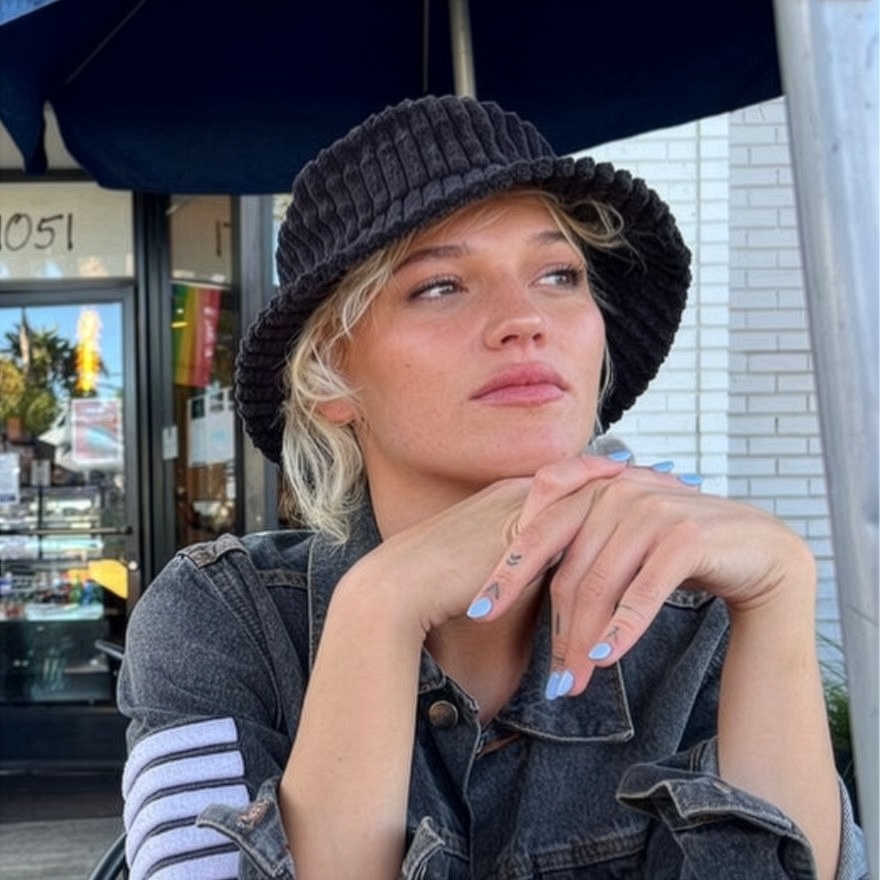
Olivia McCarthy
JOY. (Olivia McCarthy) is an artist, producer and songwriter known for self-produced electronic pop and alt-R&B, with credits including work with The Kid LAROI and Future, alongside her own internationally released projects.